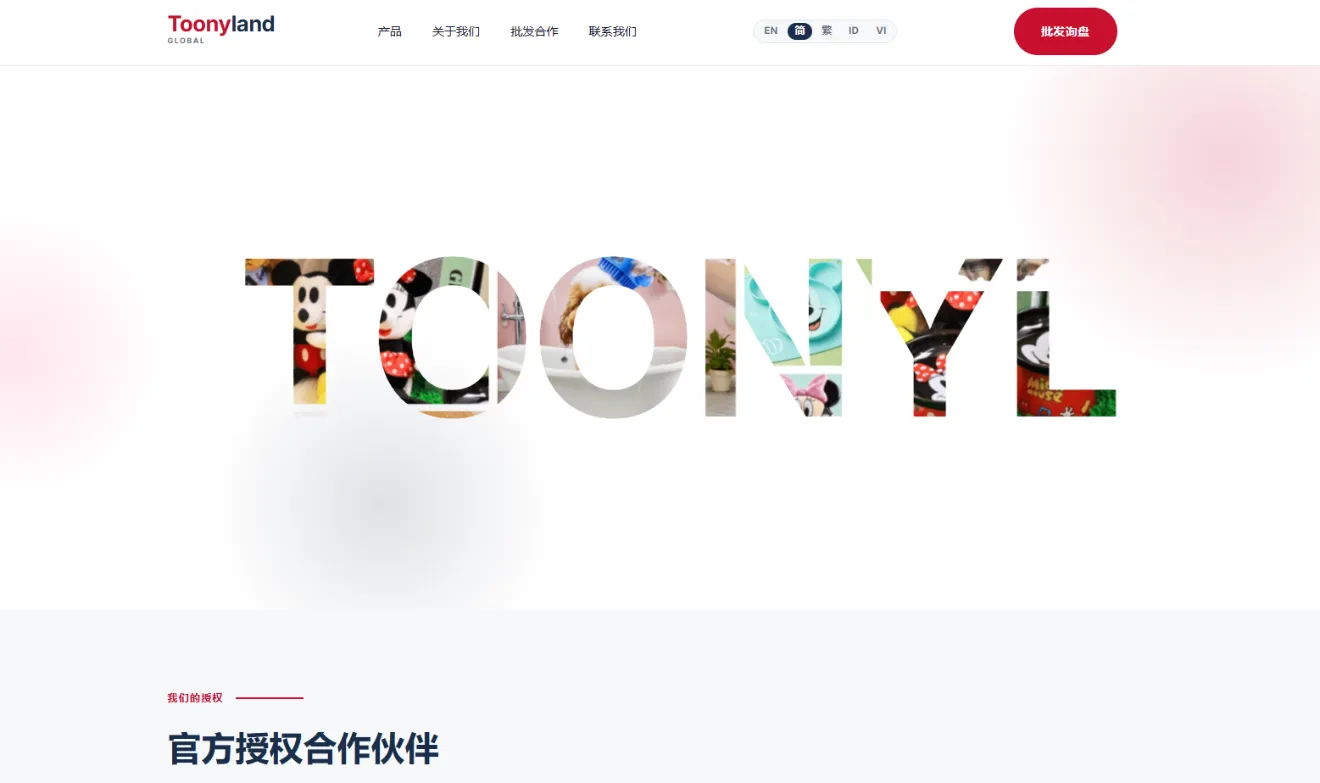
Toonyland sells to wholesale buyers in several countries, and those buyers do not all read English. A site that only worked in one language would quietly turn away a large part of the audience before they ever saw a product.
The website also had to make the licensing relationships clear straight away. For a buyer, an officially licensed supplier is a very different conversation from a generic toy factory.
What we changed
We built the site as an international wholesale platform rather than a shop: multilingual from the start, with licensing up front and one clear route to a wholesale enquiry.
Five languages, one structure
English, Simplified and Traditional Chinese, Indonesian and Vietnamese, all sharing the same layout so every market gets the full site rather than a translated summary.
Licensing first
The first section after the hero establishes the official licensing partnerships, so buyers see provenance before they see product.
One clear enquiry path
The header carries a single wholesale enquiry action. There is no cart and nothing that suggests retail.
Product does the branding
Product photography sits inside the brand presentation itself, so the range is visible from the first screen.
Why these changes matter
Meet buyers in their language
A buyer reading in their own language stays longer and trusts the supplier more. It also removes a reason to contact someone else.
Show the licence early
In licensed product, provenance decides whether a conversation happens at all. Putting it first saves the buyer looking for it.
Keep wholesale and retail separate
A single enquiry route tells trade buyers they are in the right place and filters out consumers who would never convert.
Outcome
Buyers in five language markets can now browse the licensed range in their own language and reach the wholesale team in one step.
Want to see what we'd do with yours?
Send us your current website and we'll show you a new homepage direction before you decide whether to work with us.